
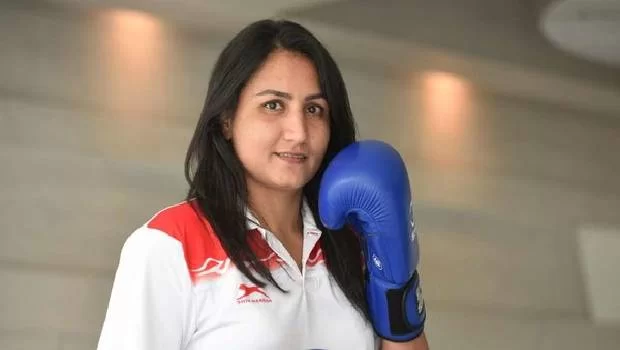
According to Indian middleweight boxer Pooja Rani Bohra, growth and peak performance are only possible when you push yourself beyond what is comfortable. Unlike many elite athletes, Pooja wasn't interested in athletics as a teenager and started boxing quite late in life. It wasn't until she was nearly 18 that she connected with the sport and embraced the rigorous physical and psychological demands it requires.
Deeply driven by the ambition to become an Olympian for India, Pooja faced several setbacks, failing to make the cut for the 2012 and 2016 Olympics. Specifically, her hopes for Rio were dashed following a second-round exit at the Women’s World Boxing Championship in May 2016. Now 30, she has finally achieved her dream of competing in Tokyo, having paved her way with a bronze medal at the 2020 Asian games, becoming the first Indian boxer to secure a spot in the Summer Olympics.
Although the journey to the Olympic ring took years of struggle, Pooja's ten years of experience have forged her into a formidable competitor. Because of her reputation for lightning-fast punches and a proven track record of winning medals, she is a strong contender for an Olympic medal. Despite her unconventional and late start in the sport, she has consistently stunned the boxing world with her rapid ascent.
Pooja recalls that her competitive journey began in 2009 at an inter-college event where she took home a silver medal. Watching the skill and determination of the younger boxers there inspired her to commit to the sport professionally. She also credits Akhil Kumar as a major influence, noting that his signature 'Open Guard' style left a lasting impression on her own approach to boxing.
While Akhil Kumar secured gold at the 2006 Commonwealth Games, he narrowly missed an Olympic medal in 2008 after falling in the quarter-finals. However, that same era saw a historic milestone for India when Vijender Singh reached the semi-finals to claim the country's first-ever Olympic boxing bronze.
Pooja believes that the key to victory lies in developing a unique fighting style tailored to one's own individual strengths. This philosophy helped her secure gold at the 2016 South Asian Games, following her appearance at the 2014 Commonwealth Games in Glasgow. Heading into Tokyo, she faces stiff competition from world-class, consistent medalists including China's Li Qian, Nouchka Fontijn from the Netherlands, Lauren Price of Great Britain, and Australia's Caitlin Parker.