


Share this story
As the tournament progresses, India and New Zealand stand out as the only unbeaten sides after five matches each. India's path has been dominant, with only the Afghanistan game and a washout against New Zealand providing any break in their momentum. A significant part of this success stems from the impact of their World Cup debutants. Here is a detailed look at their individual contributions.ICC World Cup 2019 till now and only two teams, India and New Zealand, are unbeaten so far. Apart from the previous match against Afghanistan, and the washed out game against New Zealand, India have dominated their opposition in each and every game. Their World Cup debutants have played a key role in all these matches. So, let’s have a look at how they have fared so far.
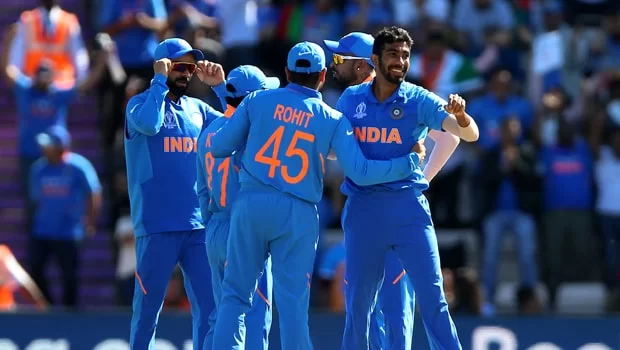
Jasprit Bumrah: Carrying the momentum from his instrumental role in Mumbai's IPL victory earlier this year, Bumrah has become a cornerstone of India's attack. He has claimed seven wickets across four outings, maintaining an impressive average of 26.71 and a stingy economy rate of 4.92. His value was highlighted in the clash against Afghanistan, where his disciplined spell of 10-1-39-2 earned him the Man of the Match award.Jasprit Bumrah: Just like the way he played a key role in Mumbai’s title triumph in the Indian T20 League this year, Bumrah has been pivotal to India’s World Cup campaign as well. He has picked up seven wickets in four matches at an excellent average and economy rate of 26.71 and 4.92 respectively. He was even adjudged the Man of the Match for his match-winning spell of 10-1-39-2 in the previous game against Afghanistan.
Bhuvneshwar Kumar: The right-arm seamer got off to a flying start, taking 2/44 in the opening match against South Africa and following it up with a strong 3-wicket haul against Australia. Unfortunately, his momentum was halted by a hamstring injury during the Pakistan game, which forced him off the field. After missing two subsequent matches, he is now expected to return to the lineup for Thursday's encounter with the West Indies.Bhuvneshwar Kumar: The right-arm pacer started off well with bowling figures of 2/44 in India’s tournament opener against South Africa, and followed that up with yet another fantastic spell of 10-0-50-3 versus Australia until a hamstring injury saw him hobbling off the field in the next match against Pakistan. He has missed two matches since then. However, he is expected to make a comeback in the match against West Indies on Thursday.
Hardik Pandya: Pandya entered the tournament with high confidence after a stellar IPL season with Mumbai, where he contributed 402 runs (avg 44.66) and 14 wickets. While his start to the World Cup was somewhat lukewarm, he has found his rhythm in recent games. He provided a vital spark with a quick-fire 48 off 27 balls against Australia and backed it up with consistent bowling, taking two wickets each against Pakistan and Afghanistan.Hardik Pandya: The Indian all-rounder came into the World Cup on the back of a successful Indian T20 League campaign with Mumbai, during which he scored 402 runs at an average of 44.66 and also took 14 wickets at a strike-rate of 18.21. He didn’t get off to the best of starts in this tournament as far as his all-round skills are concerned but he has really stepped up in the last couple of matches with this performances. After his cameo of 48 runs off just 27 balls against Australia, Pandya came up with brilliant bowling performances of 2/44 and 2/51 against Pakistan and Afghanistan respectively.
Yuzvendra Chahal: Chahal made an immediate impact with a 4-wicket haul in the opener against South Africa. He currently leads India's wicket tally with eight scalps, averaging 25.25 with an economy of 5.45. By consistently controlling the middle overs and providing crucial breakthroughs, he has become a primary weapon in India's bowling arsenal.Yuzvendra Chahal: He started off with a fabulous spell of 10-0-51-4 in their tournament opener against South Africa and is also India’s highest wicket-taker at the moment with a tally of eight wickets at an average of 25.25 and an economy rate of 5.45. He has bossed the middle-order for India in every game and has provided them with much needed breakthroughs almost every time.
Vijay Shankar: Originally brought in to replace the injured Shikhar Dhawan against Pakistan, Shankar ended up playing a much more versatile role. When Bhuvneshwar Kumar left the field due to injury in that same game, Shankar stepped in seamlessly, delivering a clinical spell of 2/22. He has also chipped in with useful runs, scoring 15* and 29, proving to be an invaluable utility player for the team.Vijay Shankar: He walked into the side in the match against Pakistan as a replacement for the injured Shikhar Dhawan and went on to play a far more important role. When Bhuvneshwar Kumar hobbled off the field in the same much with a hamstring injury, it was Shankar who stepped up with a brilliant spell of 5.2-0-22-2. He has made crucial contributions of 15* and 29 with the bat as well, and India are blessed to have such a utilitarian choice in him.
KL Rahul: Starting the campaign at number four, Rahul had a modest beginning with scores of 26 and 11*. However, Dhawan's injury forced a tactical shift, moving him to the opening slot. This change paid off, as he posted 57 and 30 in his last two outings against Pakistan and Afghanistan. He now boasts a solid average of 41.33 with 124 total runs from four innings.KL Rahul: The right-handed batsman started the tournament at No. 4 for India and made contributions of 26 and 11* in the first couple of matches. However, with Shikhar Dhawan ruled out with injury, he was subsequently pushed up to open the innings. He has come up with scores of 57 and 30 in the last two innings against Pakistan and Afghanistan respectively, and now averages a healthy 41.33 with a tally of 124 runs in four innings.
Kedar Jadhav: While he hasn't had many opportunities to bat, Jadhav showed great composure with a steady 52 off 67 balls during a tricky phase against Afghanistan. Across three innings, his scores of 0*, 9*, and 52 give him a statistical average of 61. He has also contributed sparingly with the ball, bowling five overs at an economy of 6.00.Kedar Jadhav: He hasn’t had the opportunity of doing much in the tournament but came up with a mature and composed knock of 52 off 67 deliveries when India looked to be in trouble in the previous match against Afghanistan. He has batted in a total of three innings returning with scores of 0*, 9* and 52, and, hence, averages 61 with the bat. In terms of bowling, he has rolled his arm over for just five overs in the tournament, conceding runs at an economy rate of 6.00.
Kuldeep Yadav: On paper, his average of 57.33 and strike rate of 76 might look underwhelming, but his actual impact has been far greater. He was standout against Pakistan with a tight 2/32 over nine overs and performed well against South Africa (1/46). Even when wickets didn't come against Australia or Afghanistan, he remained economical, keeping the scoring rate low—a fact reflected in his overall economy rate of 4.52.Kuldeep Yadav: He has recorded a bowling average of 57.33 and strike-rate of 76 so far. However, he has bowled much better than what those figures suggest. He was particularly exceptional in the match against Pakistan when he registered a spell of 9-1-32-2, and also bowled well against South Africa having registered bowling figures of 1/46. Although he went wicketless in the matches against Australia and Afghanistan, he ensured that he kept the run-flow in check. An overall economy rate of 4.52 in the competition so far suggests how well he has bowled.
Written by: Prasenjit Dey