
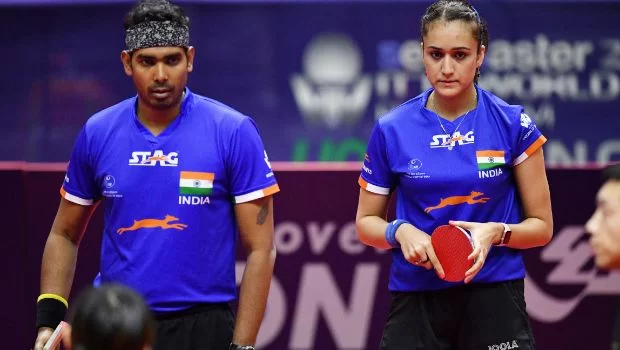
Out of the twelve Indian athletes who competed at the WTT Smash in Saudi Arabia in May, only Sharath Kamal and Manika Batra managed to reach the main draw. Because high-level international events have such tight schedules, players who fail in the qualifiers are typically required to depart the following day.
The TTFI is hoping the China Smash will set a new precedent, allowing Indian players to remain at the venue regardless of whether they win or lose. By hosting national camps during these major overseas tournaments, the Federation aims to find a more efficient way to manage the demanding WTT calendar.
Due to the knockout format of WTT events, players often endure long-haul flights only to be sent home or to their next destination immediately after a single qualifying loss.
The timing is tight: the China Smash runs from September 26 to October 6, and the Asian Championships in Astana, Kazakhstan, begin just a day later on October 7. Even if Indian players achieve a strong result—such as reaching the quarterfinals in Beijing—returning to India for a camp before flying back out to Kazakhstan would be a logistical nightmare.
To solve this, coach Massimo Costantini and the TTFI decided to base the training camp right in China. This is far more practical, as there is a direct flight from Beijing to Astana that takes under six hours, whereas traveling from the usual camp base in Bengaluru would take eleven hours. Costantini believes that staying immersed in these major events is the best way for the squad to improve over the long term.
In a conversation with The Indian Express, Costantini described this as a unique arrangement. He noted that it's rare for athletes to train for their current tournament and the next one simultaneously. While it's an unusual approach, he emphasized that adapting to the rigid WTT calendar is necessary. He admitted that players may have very little time to recover between matches, depending on their physical state.
The logic is simple: with the Asian Championships looming, combining preparations with the Smash event was the only viable option. Because of this, the entire team, including all support staff, will be stationed there.
Usually, once a player is eliminated from a WTT event, they lose access to the practice tables and must check out of their hotel. To avoid having to rent a separate facility in Beijing, the TTFI has agreed to pay a fee to the WTT so that the players can keep using the official venue.
Costantini, the 66-year-old Italian coach, believes other Asian nations will likely adopt a similar strategy. He argued that staying at the official arena keeps the players in a high-pressure, competitive atmosphere and provides the invaluable opportunity to spar with some of the world's top-ranked athletes.
Regarding sparring partners, Costantini mentioned that the Indian players are often the ones being approached by others. Since the circuit is small, players are familiar with one another and usually just practice with whoever is available. He concluded that finding quality partners won't be an issue, as the team can always rely on internal sparring if international players aren't available.